


4 lessons Leaders Week 2025 taught us about the future of fandom

Last week, the Amondo team joined sports, media, and brand leaders at Leaders Week London. It was a busy few days of sharp ideas, honest debates, and one clear message for everyone in the industry: fandom is shifting.
Fans don’t just follow anymore. They expect to take part. They switch between platforms, creators, and moments that feel real. Athletes are becoming media brands themselves, and data only matters when it helps you connect.
In this post, we dive into four lessons we took away from Leaders Week and share what they mean for how sport can stay relevant in a world where culture moves faster than ever.
1. Your fans are the foundation
Across panels from World Netball to UEFA, one point kept coming up: growth depends on building genuine relationships with your fans. They’re no longer a passive audience. Knowing who they are, what they value, and how they engage is now your biggest competitive advantage because it underpins long-term commercial growth.
That’s why grassroots still matter. It’s where participation starts and lifelong fandom grows. The organisations leading the way stay close to their communities and encourage fans to create and share, and use those insights to guide global storytelling.
This came through especially strongly in conversations around women’s sport, which is reshaping fandom entirely. Research from Wasserman Collective found that 72% of women globally now identify as avid sports fans (up 10% in three years), and women drive 75% of household purchasing decisions.
For rights holders, that creates both an opportunity and a challenge. A growing audience with real spending power is emerging. But, they expect representation and relevance. The stories that resonate are grounded in real fan experiences: women attending matches, sharing their excitement, and showing what belonging looks like. When fans see people like themselves in the stands and on screen, they’re more likely to join in and invest their time, energy, and money.
When fans feel seen, they show up. They participate, spend, and bring new fans with them – growing the sport and its commercial value. Fan-generated content makes this connection tangible. It reminds people why they care, strengthens loyalty, and drives measurable revenue.
At Amondo, we see this every day. When rights holders and brands integrate fan-generated content into their storytelling, even simple CTAs (like linking to merch pages) perform better – with click-through rates far higher than on standard landing pages. That’s because people see themselves in the story, and they trust that investing in the sport is worth it.

2. Athlete storytelling is a growth engine
Our next takeaway from Leaders Week was that athletes are no longer part of the story – they are the story.
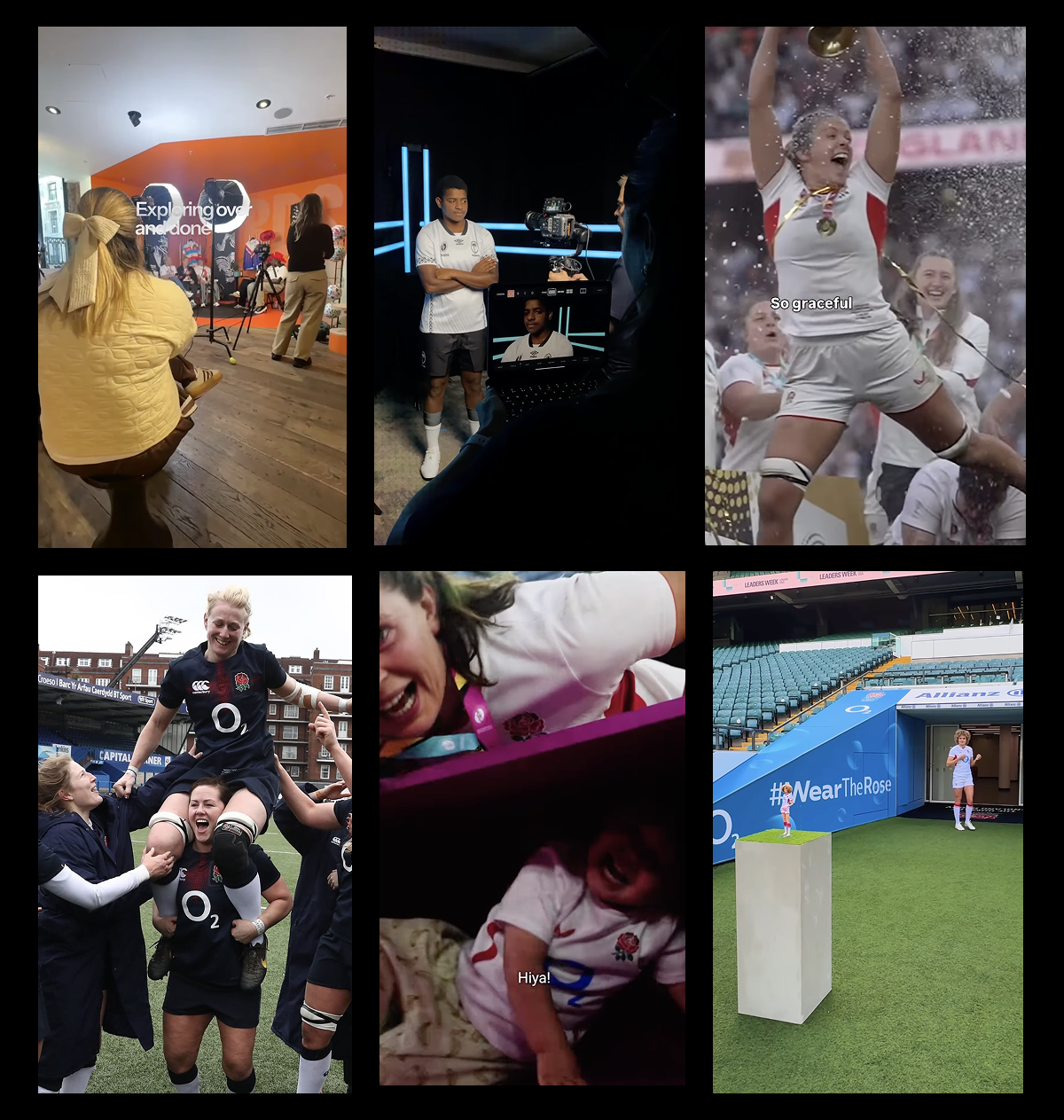
The Women’s Rugby World Cup proved this. Players’ voices and narratives went beyond the matches, creating connection and engagement that no campaign could match.
Fans connect with honesty and individuality. Seeing content directly from players brings them closer to the team and the sport. It breaks down barriers, showing athletes as people – relatable, driven and human. That relatability builds lasting loyalty.
And the numbers back it up. Athlete-led social media posts from the tournament generated over 219 million views, amplifying reach far beyond traditional broadcast.
These figures show that athlete storytelling isn’t a nice-to-have. It’s a growth driver. Rights holders that bring player-led storytelling into their owned channels see real returns – from higher engagement and ticket sales to stronger sponsorship ROI and deeper fan relationships.
3. Sport is competing for attention
We also learned that sport isn’t just competing with other sports anymore. It’s competing with everything – music, fashion, film, gaming and social media.
Holding someone’s full attention for 90 minutes is rare. People scroll, stream, and switch constantly. That’s not a threat; it’s an opportunity to rethink how sport shows up.
Panels from Manchester City, FIFA, and Unilever all made the same point: the smartest organisations treat sport as part of culture, not separate from it. They don’t expect fans to come to them. They meet fans where they already are. That means short-form stories, highlights, and behind-the-scenes content that feel natural on the platforms fans use every day.
When sport shows up in the same spaces as fashion and music, it becomes part of the cultural conversation. And when moments are shareable, they live far beyond match day.
At Amondo, we help our partners capture that energy – turning live moments and fan reactions into stories that keep the spotlight burning long after the final whistle.
4. From content to connection
The next big lesson from Leaders Week was that sport can’t rely on reach alone. It’s not just about getting fans to engage – it’s about owning where and how that engagement happens.
Too much of the fan relationship still lives on third-party platforms. Those platforms collect the data, control the interaction, and benefit from the insight that rights holders actually need. The result? They hold the value, while sports lose visibility over their own audiences.
The organisations leading the way are taking that relationship back. They’re building owned ecosystems where they control the fan journey (from discovery to conversion) and can see exactly what drives participation, purchase, and retention.
World Netball’s direct-to-consumer platform, NetballPass, was a standout example discussed at Leaders Week. It connects live content, storytelling and commerce all in one place – giving fans real reasons to subscribe and return. By owning that relationship, World Netball isn’t just generating revenue. It’s collecting insight that fuels better content, smarter partnerships, and sustainable growth.
Social platforms still matter for discovery. YouTube and TikTok are where fans often find the story. But the real value comes when you bring them into your own ecosystem – a space where you can personalise, reward loyalty, and build connection that lasts.
Sport’s next phase of growth isn’t about producing more content. It’s about creating spaces that fans choose to return to. And owning the data that makes those experiences smarter every time.
The future is human
Leaders Week made one thing clear: fandom is evolving fast. Fans don’t just want access. They want to participate, connect, and feel part of the story.
The sports and brands leading that change aren’t chasing numbers. They’re building meaning. They understand that growth comes from depth – from giving fans, athletes, and partners space to contribute, not just consume.
From grassroots to global stages, the opportunity now is to connect every layer of the fan experience. To turn fleeting engagement into long-term loyalty. To make sport feel as alive off the pitch as it does on it.
At Amondo, that’s what drives us. We help rights holders and brands capture the moments, voices, and reactions that matter and turn them into stories that live on their own platforms. Stories that fans see themselves in. Stories that last and drive commercial impact.
Because fandom isn’t about more content. It’s about connection that means something, both for your audience and your business.
Related Stories


Live events: From fan-contributed content to behavioural intelligence
Using Foals' sold-out Alexandra Palace shows as a lens, we explore how fan-contributed content from live music events can be activated to capture first-party behavioural intelligence.
On 21 June 2019, Foals played the first of two sold-out shows at London's Alexandra Palace, appearing to a 10,000-strong crowd touring the release of their fifth album, "Everything Not Saved Will Be Lost — Part 1".
Foals continued their reign as one of the UK's most beloved bands, and one with a live reputation that precedes them — Ally Pally was, of course, no exception (DIY Magazine; Clash).
But don't take our word for it - take a look for yourself:
Activating fan-contributed content to capture real audience behaviour
We've all been there, witnessing moments in live music that we feel compelled to capture and share.
But these snapshots are valuable. They create a stream of fan-contributed content, which provides a signal of what resonates most strongly among music buffs.
When activated effectively, this content becomes a powerful source of first-party behavioural intelligence, revealing what audiences choose to engage with and explore further — or ignore entirely.
A measurable window into live experience
Live music is one of the most visceral and memorable forms of engagement.
For those not present (or reliving the moment after the show) fan-contributed content provides a window not just into the experience itself, but into how audiences behave when emotion and attention are at their peak.
A single video might capture a highlight from the crowd, but its real value lies in what happens next.
Examples include how long people watch, what they interact with, and whether they choose to take further action — e.g., booking tickets for the next show.
Unfiltered behaviour, not polished performance
Fan-contributed content offers an unfiltered, first-person perspective, not only because it is more "authentic," but because it reflects how audiences naturally respond in real environments.
With a view from the crowd, it feels as though you're there yourself. And more than professional content, it allows the viewer to relate to and connect with the creator: "This is what the experience was like — see it from my perspective".
That lack of polish is valuable because it produces behavioural signals that are closer to reality. Audiences accept and engage with these imperfections because they mirror real experience, creating interaction patterns that reveal genuine interest rather than passive consumption.
An opportunity to understand what actually resonates
With a camera in every phone and a phone in every pocket, audiences continuously generate content that reflects what captures attention in the moment.
But the opportunity for brands isn't to collect more content, it's to understand how audiences interact with it.
Now more than ever, we're viewing experiences quite literally through the lens of others. Increasingly, experiences are discovered, revisited and evaluated through audience-shared moments, creating a measurable behavioural layer.
So what does this mean for brands?
Experience and emotion matter, of course, but what brands really need is clarity. Clarity on which moments capture attention, which formats sustain engagement, and which interactions influence what audiences do next.
Fan-contributed content is valuable to brands, rights holders and publishers, but less so in isolation.
Its value emerges when content is activated in consistent, portable branded formats that allow behaviour to be measured and compared over time.

Connecting content, behaviour and outcomes
By embedding fan-contributed content into branded formats — such as can be achieved with Amondo's Galleries — brands can observe how audiences respond in context, capturing first-party interaction data.
This behavioural insight connects content exposure to meaningful actions, giving brands clarity on what works, why it works, and what to amplify next.
If you're curious to see how this works in practise, check out our case studies here.

How Watford FC engaged fans to create and share content for their FA Cup Hub with Amondo
Here's how Watford FC curated fan-generated content into an FA Cup Hub during their historic cup run, tripling session length and turning matchday excitement into measurable digital engagement.
Premier League football club Watford FC made it through to the final round of this year's FA Cup, battling it out against Manchester City in a historic match at Wembley Stadium on 18th May 2019.
To bring supporters closer to one of the club's biggest moments in recent years, Watford FC wanted to showcase the fan experience across its digital channels.
The challenge
For football fans, attending a live match is an unforgettable experience. The roar of the crowd, the excitement of the game, and the shared passion of supporters make every match day special.
Capturing this energy and emotion online is a challenge, but when done well, it allows fans everywhere to relive the thrill and feel connected to Watford FC, whether in the stadium or at home.
Watford FC could rely on its fans to capture their experiences, but it was searching for a way to bring all of this fan content together under one roof, ensuring every supporter's voice could be seen and celebrated.
The solution
The sights and sounds of Wembley were showcased through a combination of fan-curated content, alongside carefully integrated branded and sponsored material.
Through Amondo's managed service, the best content from each of these streams was curated into an "FA Cup Hub" Gallery, which was embedded on the Watford FC website, as well as shared through social media channels. Watford fans could relive the experience by scrolling through a feed of highlights and interacting with tiles for a closer look.

By encouraging fans to participate through social media channels, the Gallery brought supporters together around Watford's FA Cup run, encouraging content creation while seamlessly incorporating brand partners into the live experience.

The results
Despite losing heavily to Man City, fans displayed an unwavering, fierce pride in their team, refusing to let the defeat crush their spirits or those of the players.
The Gallery was a tribute to this loyalty, capturing the support of Watford's fans in one of the biggest matches in the club's history.
The FA Cup Hub Gallery boosted session length and interaction rate on the Watford FC website. They saw a three times increase in page session length, a 9% brand content interaction rate, and an average of 3.6 content clicks per view.
It's a great example of how to marry digital content with live events. Football is an emotional sport that attracts diehard fans like nothing else, and it's essential to maintain fan loyalty throughout the ups and downs of a team's journey.
Driving fan engagement online strengthens the connection between the club and supporters, while also creating meaningful opportunities for brand partners.
What can we learn from the FA Cup Hub campaign?
A few takeaways to apply to your own experiential marketing campaigns: